GENDER RIGHTS AND DEVELOPMENT PROGRAM
With
prosperity and industrialization the human society has lost values
and peace. It is manifested in changing gender relations in the
society. The female gender is weakening and losing power to enjoy
rights, equality, justice, development and participation. Women’s
capacity of taking decisions about their life, reproduction, political
choices and participation in public affairs has declined in many
of traditional/ orthodox but developing societies. Grassroots India
has been intervening at small scale to engage with the powerless
and poor women to build their strengths so as to enable them overcome
the violations of gender rights in broader sense.
Current Projects
Women Socio-Political Empowerment
Women are considered a liability and weakness
of men in Indian society. Indian women have been facing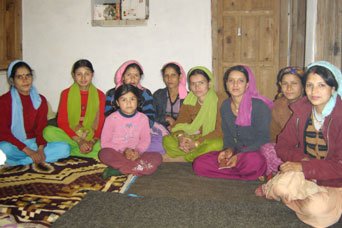 problems of gender discrimination, gender violence, and socio-political
disempowerment. Women remain victims of feudalistic institutions
and stringent customs in socially divided society. When the woman
works since early morning till late evening and carry burden of
household as well as outdoor works, they have no control over
their incomes. They have least say in family decisions. Their
participation in community’s public affairs including local
governance is negligible. They are treated merely as passive workforce.
Building the capacities of women in rural areas about their legal
rights and entitlements and processes of accessing the rights/justice,
and building their leadership in local governance and public affairs
management are the important interventions.
problems of gender discrimination, gender violence, and socio-political
disempowerment. Women remain victims of feudalistic institutions
and stringent customs in socially divided society. When the woman
works since early morning till late evening and carry burden of
household as well as outdoor works, they have no control over
their incomes. They have least say in family decisions. Their
participation in community’s public affairs including local
governance is negligible. They are treated merely as passive workforce.
Building the capacities of women in rural areas about their legal
rights and entitlements and processes of accessing the rights/justice,
and building their leadership in local governance and public affairs
management are the important interventions.
The project is currently operational in Kullu
district with future possibility of extension in Mandi, Kangra
and Chamba districts of Himachal Pradesh. It is in starting phase
in Ghaziabad district of Uttar Pradesh. It needs to cover Meerut
district too.
For achievements of the project, please see Annual
Report.
For further information, please contact
the organization.
Adolescent Health Education
Adolescents
are in a time in their life when they construct their own beliefs
and values; they undergo emotional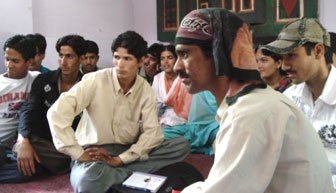 and physical changes; and they gain social awareness to form lasting
relationships. Adolescents often turn to friends for information,
making it fertile ground for myths and misinformation to spread.
Momentarily the education on reproductive health in schools is
classroom and lecture-centred. Some sensitive, but important,
topics do not get tackled and the content is not based upon adolescent
needs, but upon what the health worker believes should be told.
and physical changes; and they gain social awareness to form lasting
relationships. Adolescents often turn to friends for information,
making it fertile ground for myths and misinformation to spread.
Momentarily the education on reproductive health in schools is
classroom and lecture-centred. Some sensitive, but important,
topics do not get tackled and the content is not based upon adolescent
needs, but upon what the health worker believes should be told.
The project
is currently operational in Kullu district with future possibility
of extension in Mandi district of Himachal Pradesh.
For
achievements of the project, please see Annual
Report.
For further information, please contact
the organization.
Female
Reproductive Rights
An assessment of female reproductive rights rural areas indicates
that the reproductive health status of women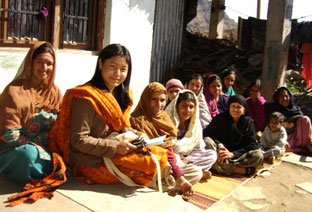 is poor. Gynaecological morbidity is estimated to be high, and
knowledge and understanding of HIV/AIDS and prevention and management
of STIs is low. Societal values make it difficult for women to
access information about their reproductive system and reproductive
health. Menstruation forms a mystery for many, leading to the
acceptance of derogatory practices. Through shame and a feeling
of impurity menstrual practices are often unhygienic giving ways
to infections of the female reproductive tract. Skilled birth
attendance is unavailable for most, and although cultural practices
surrounding childbirth are rich, yet they adversely affect mother
and child. An extended extension work on reproductive rights is
required to adequately address burgeoning issues in rural areas.
is poor. Gynaecological morbidity is estimated to be high, and
knowledge and understanding of HIV/AIDS and prevention and management
of STIs is low. Societal values make it difficult for women to
access information about their reproductive system and reproductive
health. Menstruation forms a mystery for many, leading to the
acceptance of derogatory practices. Through shame and a feeling
of impurity menstrual practices are often unhygienic giving ways
to infections of the female reproductive tract. Skilled birth
attendance is unavailable for most, and although cultural practices
surrounding childbirth are rich, yet they adversely affect mother
and child. An extended extension work on reproductive rights is
required to adequately address burgeoning issues in rural areas.
Sporadic activities
have started on this project. They include the awareness of women
to equip the women for accessing their reproductive rights and reproductive health.
The unstructured
activities (not a full project) are in Kullu and Mandi districts
of Himachal Pradesh. This project has potential to be extended
in Uttar Pradesh too.
For
achievements of the project, please see Annual
Report.
For further information, please contact
the organization.
Gender
Violence
Violence against
women is widespread in South Asian countries especially India,
Pakistan and Bangladesh. Women remain victims of feudalistic institutions
and stringent customs in socially divided society. From home to
crop field, from home to office, or from home to parliament, women
continue to encounter violence. Over 37% of married women are
victims of physical or sexual abuse by their husbands in India.
More women face violence in rural areas (40.2%) as compared to
those in the urban areas (30.4%). Bihar province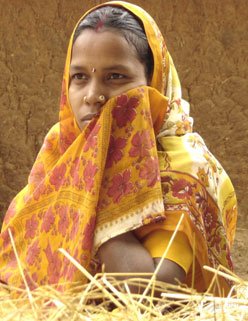 ranks at top followed by Punjab and Uttar Pradesh, while Madhya
Pradesh accounts for 45.8%. Domestic violence in Madhya Pradesh
alone has increased 3 times in the last 5 years, police records
say. Domestic violence, as a manifestation of gender inequality,
contributes to the failure of women to obtain education, drains
the health services, and blocks the access of women to power and
thus true democracy. Gender violence starts before birth of the
child. In the quest of son, the family forces the pregnant mother
to abort the girl child. So the killing of daughter in womb is
practiced in well-off families. The daughters thus suffer from
violent minds of father and mother and others. They are actually
believed to be insignificant and undesirable.
ranks at top followed by Punjab and Uttar Pradesh, while Madhya
Pradesh accounts for 45.8%. Domestic violence in Madhya Pradesh
alone has increased 3 times in the last 5 years, police records
say. Domestic violence, as a manifestation of gender inequality,
contributes to the failure of women to obtain education, drains
the health services, and blocks the access of women to power and
thus true democracy. Gender violence starts before birth of the
child. In the quest of son, the family forces the pregnant mother
to abort the girl child. So the killing of daughter in womb is
practiced in well-off families. The daughters thus suffer from
violent minds of father and mother and others. They are actually
believed to be insignificant and undesirable.
India has
got few laws such as Protection of Women’s Rights on Divorce
Act 1986, Dowry Prohibition Act 1961, Indecent Representation
of Women (Prohibition) Act 1986 and few clause of Indian Penal
Code. Indian parliament passed the ‘Protection of Women
from Domestic Violence Act 2005’. Despite these laws providing
for protection of women, the gender violence is continuing unabated.
Since 2006
the GIT started supporting work of Gender Resource Centre (GRC)
in Panna district of Madhya Pradesh, which is run by Samvedna
Integrated Development Association (SIDA), the local partner of
GIT. GRCs are proposed to be set up in Uttar Pradesh, Punjab and
Haryana too to address the DV particularly.
For
achievements of the project, please see Annual
Report.
For further information, please contact
the organization.
Additional
Proposed Projects |
•
|
Rural
Muslim Women Leadership in Uttar Pradesh |
•
|
Girl
Child Education in Rural Muslim Community in Uttar Pradesh
a |
•
|
Female
Foeticide/ Infanticide in Madhya Pradesh, Haryana, Punjab
|
For further information on these proposed projects, please
see List of Projects OR
contact the organization.
|