| PROJECTS/INITIATIVES
FOR FIELD-BASED INTERVENTIONS |
| |
LIVELIHOODS
& FOOD SECURITY PROGRAM
|
Ongoing Projects
| Project |
Location |
Budget |
Agro-Biodiversity
Conservation & Food Security
see
details
|
Kullu
district (HP)
[expansion planned in Mandi, Kangra & Chamba districts]
|
Rs. 10
lakhs (US$25000) for a cluster of 20 villages |
Sustainable
Agriculture Development
see
details
|
Kullu
district (HP)
[expansion planned in Mandi, Kangra & Chamba districts]
|
Rs. 10
lakhs (US$25000) for a cluster of 20 villages |
Microcredit
& Micro-Entrepreneurship for Sustainable Livelihoods
see
details
|
Kullu
district (HP)
[expansion planned in Mandi, Kangra & Chamba districts
|
Rs. 4 lakhs
(US$10000) for a cluster of 30 villages |
|
Additional
Proposed Projects
|
 Micro-entrepreneurship
for poverty reduction among Muslim and Dalit communities in Uttar
Pradesh Micro-entrepreneurship
for poverty reduction among Muslim and Dalit communities in Uttar
Pradesh |
Poverty
alleviation is possible through investment in appreciating the stren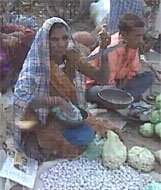 gths
of local poor families. Their human capacities should be streamlined
by giving them training on locally-viable small businesses and linking
them with market avenues. Micro-entrepreneurship, which is suitable
in given socio-cultural contexts, is tested mean through which the
poverty among marginalized communities such as Muslims and Dalits
may be halted. Grassroots India Trust has already been doing these
activities in mountain communities of Kullu district (HP). However,
the socio-cultural and economic contexts in Western or Eastern Uttar
Pradesh, where this project is proposed for, are different from
mountains. Yet the basic strategies of interventions are similar.
This would be a challenging project viewing the low trade skills
of the target communities in Uttar Pradesh. gths
of local poor families. Their human capacities should be streamlined
by giving them training on locally-viable small businesses and linking
them with market avenues. Micro-entrepreneurship, which is suitable
in given socio-cultural contexts, is tested mean through which the
poverty among marginalized communities such as Muslims and Dalits
may be halted. Grassroots India Trust has already been doing these
activities in mountain communities of Kullu district (HP). However,
the socio-cultural and economic contexts in Western or Eastern Uttar
Pradesh, where this project is proposed for, are different from
mountains. Yet the basic strategies of interventions are similar.
This would be a challenging project viewing the low trade skills
of the target communities in Uttar Pradesh.
Approx.
Budget: Rs. 8 lakhs (US$20000) for 5 villages
|
Support
for this initiative is solicited. You
can help us to help the poor.
|
Interventions
to support NTFP-based livelihoods through such as market information,
maneuvering trade chain, value addition, and other approaches in
Chhattisgarh, Himachal Pradesh and North-East India
|
Tribal
groups of Central India and local communities of Himalayas substantially
depend on non-timber forest products (NTFPs) for household consumptive
uses and family incomes.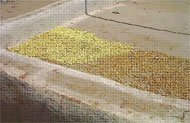 Since the agriculture in majority of tribal groups is either in
primitive stage or not so developed, the families rely on the supply
of NTFPs from forests and their routine life is almost interwoven
around the forests and forest products. GIT has ever visualized
the tribal livelihoods revolving around NTFPs, so is their development
as such. As the family incomes generate out of selling of NTFPs
in local markets, so interventions related to market of NTFPs seems
inevitable. Yet, how and where to intervene in the market chains
or how to add value to the forest products as post-harvest methods
is extremely important for poor families seeking improving their
incomes.
Since the agriculture in majority of tribal groups is either in
primitive stage or not so developed, the families rely on the supply
of NTFPs from forests and their routine life is almost interwoven
around the forests and forest products. GIT has ever visualized
the tribal livelihoods revolving around NTFPs, so is their development
as such. As the family incomes generate out of selling of NTFPs
in local markets, so interventions related to market of NTFPs seems
inevitable. Yet, how and where to intervene in the market chains
or how to add value to the forest products as post-harvest methods
is extremely important for poor families seeking improving their
incomes.
Approx. Budget: Rs. 10 lakhs (US$25000)
for a cluster of 20 villages |
Support
for this initiative is solicited. You
can help us to help the poor.
|
| |
Post-harvest
technology support to farmers in Central India and Himalayas
|
Growing
crops is a routine work; but, when the crop matures the farmers
become alert for safe harvesting of the crop and its storage. Inaccessibility
to develope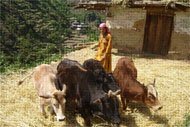 d market
centers and the imperfect pricing of commodities in local rural
markets have created the necessity to store the agricultural produce
for longer periods. Appropriate and indigenous post-harvest technologies
being employed by the farmers save their farm produce from spoilage.
It reduces the vulnerability of the farmers in terms of food and
seed necessity particularly in lean periods. GIT seeks to document
and promote low-cost methods of post harvest storage at family level.
Tribal and Himalayan peasants in Central India and Himalayan region
are potential communities to be given the inputs of this sort to
strengthen their agricultural practices for enhanced food security. d market
centers and the imperfect pricing of commodities in local rural
markets have created the necessity to store the agricultural produce
for longer periods. Appropriate and indigenous post-harvest technologies
being employed by the farmers save their farm produce from spoilage.
It reduces the vulnerability of the farmers in terms of food and
seed necessity particularly in lean periods. GIT seeks to document
and promote low-cost methods of post harvest storage at family level.
Tribal and Himalayan peasants in Central India and Himalayan region
are potential communities to be given the inputs of this sort to
strengthen their agricultural practices for enhanced food security.
Approx. Budget: Rs. 10 lakhs (US$25000) for a cluster of 25
villages
|
| Support
for this initiative is solicited. You
can help us to help the poor. |
| |
| Livestock
and pastoral development in Western Himalayas |
Livestock
is vital component of rural livelihoods and the products like milk,
wool, meat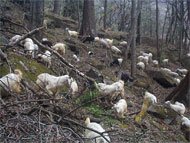 , hairs
and shit, draught power and social significance (animals win social
status for a family) constitute substantial part of foods and family
economy in rural areas everywhere. In mountains particularly, the
livestock based livelihood systems are characterized with pastoralism
and transhumance. In and around Great Himalayan National Park in
Kullu district of Himachal Pradesh countless local families graze
and herd their animals in pastures, grasslands and forests of the
GHNP and in its vicinity. On the backdrop of fast declining biomass
in the grazing grounds or outside and its negative impact on keeping
animals, and reducing productivities of animals at home, it appears
essential to intervene to find viable options. Replacing the cattle-based
economy is not possible as it has been part of traditional ways
of augmenting food and livelihoods and of the local culture. So
options are to upgrade the quality of animals for better productivities.
Doing so supports the families even if the number of animals reduces.
Simultaneously, the pastoralists need to be educated about the improvement
in breeds, hygiene and husbandry of animals, and, simultaneously,
the conservation of bio-resources. Some veterinary and ethno-veterinary
interventions are also required. , hairs
and shit, draught power and social significance (animals win social
status for a family) constitute substantial part of foods and family
economy in rural areas everywhere. In mountains particularly, the
livestock based livelihood systems are characterized with pastoralism
and transhumance. In and around Great Himalayan National Park in
Kullu district of Himachal Pradesh countless local families graze
and herd their animals in pastures, grasslands and forests of the
GHNP and in its vicinity. On the backdrop of fast declining biomass
in the grazing grounds or outside and its negative impact on keeping
animals, and reducing productivities of animals at home, it appears
essential to intervene to find viable options. Replacing the cattle-based
economy is not possible as it has been part of traditional ways
of augmenting food and livelihoods and of the local culture. So
options are to upgrade the quality of animals for better productivities.
Doing so supports the families even if the number of animals reduces.
Simultaneously, the pastoralists need to be educated about the improvement
in breeds, hygiene and husbandry of animals, and, simultaneously,
the conservation of bio-resources. Some veterinary and ethno-veterinary
interventions are also required.
Approx. Budget: Rs. 10 lakhs (US$25000)
for a cluster of 25 villages |
| Support
for this initiative is solicited. You
can help us to help the poor. |
| |
| Rainwater
management for sustainable agriculture and livelihoods in Mountain
of Himachal Pradesh and Uttarakhand |
Himalayan
mountains are the watersheds for most major rivers of North and
North-East India and Pakistan. But the mountain communities often face acute shortage
of irrigation water due to the fact that most of rainwater drains
off into streams or rivulets. It is also happening because the rainwater
is not conserved/ stored where it falls. To remove the problem of
unavailability of irrigation water in hills managing the rainwater
is last solution. GIT has held consultations with poor farmers of
Mandi, Kullu and Kangra districts of Himachal Pradesh and Kumaon
region of Uttarakhand for undertaking ‘rainwater management’
and improve their agricultural lands. This project is expected to
enhance the farm productivity and household economy by 300-400 percent.
and Pakistan. But the mountain communities often face acute shortage
of irrigation water due to the fact that most of rainwater drains
off into streams or rivulets. It is also happening because the rainwater
is not conserved/ stored where it falls. To remove the problem of
unavailability of irrigation water in hills managing the rainwater
is last solution. GIT has held consultations with poor farmers of
Mandi, Kullu and Kangra districts of Himachal Pradesh and Kumaon
region of Uttarakhand for undertaking ‘rainwater management’
and improve their agricultural lands. This project is expected to
enhance the farm productivity and household economy by 300-400 percent.
Approx. Budget: Rs. 20 lakhs (US$50000) for a cluster of 20 villages
|
| Support
for this initiative is solicited. You
can help us to help the poor. |
| |
| GENDER
RIGHTS & DEVELOPMENT PROGRAM |
Ongoing Projects
| Project |
Location |
Budget |
Women Empowerment
see
details
|
Himachal
Pradesh; Uttar Pradesh
|
Rs. 10
lakhs (US$25000) for a cluster of 50 villages in HP or 10 villages
in UP |
Adolescent
Health Education
see
details
|
Kullu
district (HP)
[expansion possible in Mandi district]
|
Rs. 10
lakhs (US$25000) for a cluster of 40 villages |
Female
Reproductive Rights
see
details
|
Kullu
& Mandi districts (HP)
[expansion possible in Uttar Pradesh]
|
Rs. 12
lakhs (US$30000) for a cluster of 30 villages |
|
Additional Proposed Projects
|
| Rural
Muslim Women Leadership in Uttar Pradesh |
When
the burden of misinterpreted Islamic rulings makes the women further
vulnerable and  powerless,
the rural Muslim society is in general male-governed and repressive
to women. Structural and institutional basis of gender inequity
in Muslim society has seldom been addressed in popular Muslim community
development movements. Resultantly, the women continue to face unending
problems of gender discrimination, gender violence, lack of education,
denial of reproductive rights, deprivation from participating the
public affairs, and, often, the victimization under misinterpreted
Islamic rules. Building the capacities of rural Muslim women about
their legal rights and entitlements and processes of accessing the
rights/justice, and building their leadership in local governance
and public affairs management are proposed solutions to address
the burgeoning problem. Further proposed measures include the capacity
building of local women leaders to mobilize the fellow women to
unite and assert their rights, and sharpen their own leadership. powerless,
the rural Muslim society is in general male-governed and repressive
to women. Structural and institutional basis of gender inequity
in Muslim society has seldom been addressed in popular Muslim community
development movements. Resultantly, the women continue to face unending
problems of gender discrimination, gender violence, lack of education,
denial of reproductive rights, deprivation from participating the
public affairs, and, often, the victimization under misinterpreted
Islamic rules. Building the capacities of rural Muslim women about
their legal rights and entitlements and processes of accessing the
rights/justice, and building their leadership in local governance
and public affairs management are proposed solutions to address
the burgeoning problem. Further proposed measures include the capacity
building of local women leaders to mobilize the fellow women to
unite and assert their rights, and sharpen their own leadership.
Approx. Budget: Rs. 20 lakhs (US$50000) for a cluster of 20 villages
|
| Support for
this initiative is solicited. You
can help us to help the poor. |
| |
| Girl
Child Education in Rural Muslim Community in Uttar Pradesh |
In post-independence periods
several communities have been forced onto fringes or into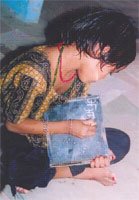 deprived conditions. Among them the most deprived and disadvantaged
communities are Muslims (95% belong to lower castes) and Dalits.
Uttar Pradesh comprises 20% of the population of all Muslims in
India. In rural areas, where our individual projects will be based,
the literacy among Muslims is not more than 20%. Female literacy
in rural Muslims is hardly 5-10%. Girl enrolment in Uttar Pradesh
is very low (nearly 10-15%) because Muslims education is higher
in South India that makes national average high. When the government
neglected the Muslim communities, the Muslims particularly in rural
areas of Uttar Pradesh have got apathy to modern school education,
taboo to girl education, and social structures/institutions that
discriminate the female gender and suppress/repress the girls/women.
Amid high gender inequity among rural Muslims, very few girls receive
school education. If the girls are given education, they are preferred
being sent in madarasa for religious education up to elementary
level. On the other hand, almost all villages in Uttar Pradesh are
served with primary/ elementary schools under government’s
Sarva Shiksha Abhiyan. But it is the Muslim community that does
not give value to schools and hence their children remain out-of-school.
The girls are considered economic burden often, and thus get least
priority in education. Though the habit of educating their children
is scarce in the villages; however, if it is, is mainly for the
sons. The expenditure on the females is considered to be the wastage
of money. They are actually believed to be insignificant and undesirable.
deprived conditions. Among them the most deprived and disadvantaged
communities are Muslims (95% belong to lower castes) and Dalits.
Uttar Pradesh comprises 20% of the population of all Muslims in
India. In rural areas, where our individual projects will be based,
the literacy among Muslims is not more than 20%. Female literacy
in rural Muslims is hardly 5-10%. Girl enrolment in Uttar Pradesh
is very low (nearly 10-15%) because Muslims education is higher
in South India that makes national average high. When the government
neglected the Muslim communities, the Muslims particularly in rural
areas of Uttar Pradesh have got apathy to modern school education,
taboo to girl education, and social structures/institutions that
discriminate the female gender and suppress/repress the girls/women.
Amid high gender inequity among rural Muslims, very few girls receive
school education. If the girls are given education, they are preferred
being sent in madarasa for religious education up to elementary
level. On the other hand, almost all villages in Uttar Pradesh are
served with primary/ elementary schools under government’s
Sarva Shiksha Abhiyan. But it is the Muslim community that does
not give value to schools and hence their children remain out-of-school.
The girls are considered economic burden often, and thus get least
priority in education. Though the habit of educating their children
is scarce in the villages; however, if it is, is mainly for the
sons. The expenditure on the females is considered to be the wastage
of money. They are actually believed to be insignificant and undesirable.
Proposed
projects aim at improving the primary education of girls among rural
Muslim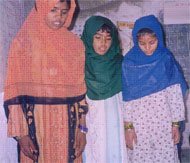 communities.
Projects are to strengthen the formal education delivery system
of the government. For the purpose of influencing the public opinions
and accruing tangible changes in state education policy, each individual
project has proposed establishment of demonstrable models of Muslim
girl education in villages. Campaigning and advocacy at district
level is also proposed to create mass awareness among rural Muslim
community for girl education. Campaigning and advocacy at state
level to influence the state education policy in favour of Muslim
girl education and socio-culturally appropriate course curricula
in formal schools are important elements. communities.
Projects are to strengthen the formal education delivery system
of the government. For the purpose of influencing the public opinions
and accruing tangible changes in state education policy, each individual
project has proposed establishment of demonstrable models of Muslim
girl education in villages. Campaigning and advocacy at district
level is also proposed to create mass awareness among rural Muslim
community for girl education. Campaigning and advocacy at state
level to influence the state education policy in favour of Muslim
girl education and socio-culturally appropriate course curricula
in formal schools are important elements.
Approx.
Budget: Rs. 304962 (US$7624) per year per village [project of min.
10 villages in a district;
4 districts are proposed]
|
| Support for
this initiative is solicited. You
can help us to help the poor. |
| |
| Female
Foeticide/ Infanticide in Madhya Pradesh, Haryana, Punjab |
In
the quest of son the parents do abort the female fetuses. Roots
causes of female genocide are the menace of dowry, preference for
boys, inferior position of women in society, daughters/women supposed
to affect honour of the men, social insecurity of women, exploitation
of women/girls of weaker families by upper castes and powerful.
The issue is very serious than it appears. Modern medical facilities
have added to the problem. Medical Termination of Pregnancy Act
(MTPA) 1971 allows abortion if the doctor is of the opinion that
the continuance of the pregnancy would endanger the life of the
pregnant woman or involve grave injury to her physical or mental health; or there
is substantial risk that the child would suffer from disabling physical
or mental abnormalities. Both the medical practitioners and the
parents benefit from this legal provision. According a study, 570
babies out of 600 surveyed vanished from the hospital, with their
mothers. Nearly 80% of these vanishing babies (> 450) become
victims of infanticide (George et al, 1992). There is high rate
of female foeticide and infanticide in Punjab, Bihar, Himachal Pradesh,
Uttar Pradesh, Haryana, Rajasthan, Madhya Pradesh and Uttar Pradesh
in India. Katihar District of Bihar alone accounts for over 1000
infanticides cases per year. Each of 35 midwives surveyed by Adithi
kill at least 3-4 female babies every month who receives Rs. 25-30
(< £0.5) per killing. Punjab has highest rate of foeticide.
Bundelkhand and Gwalior-Chambal regions in Madhya Pradesh are most
prone. For example, the Panna district (Madhya Pradesh) had sex
ratio of about 850 between 1981 and 2001. Considering the declining
number of females, the social implications are grave. The manifestation
is: increasing trend of prostitution, sale of women, gender imbalance,
cruel killing of girls, violence against women (e.g. rapes, molestation),
and so on. Pre-natal Diagnostic Techniques (Regulation and Prevention
of Misuse) Act 1994 – PCPNDT – provides for the severe
punishment to the accused, the doctor or the parents. Indian Penal
Code defines the infanticide as murder. Yet, the female foeticide
is exorbitantly high in North India, and in parts of South India.
In addition to killing the girls in womb or after birth, there are
also the passive forms of infanticide e.g. neglect, sustained nutritional
deprivation, delayed health care, unequal allocation of household
resources for female infants.
involve grave injury to her physical or mental health; or there
is substantial risk that the child would suffer from disabling physical
or mental abnormalities. Both the medical practitioners and the
parents benefit from this legal provision. According a study, 570
babies out of 600 surveyed vanished from the hospital, with their
mothers. Nearly 80% of these vanishing babies (> 450) become
victims of infanticide (George et al, 1992). There is high rate
of female foeticide and infanticide in Punjab, Bihar, Himachal Pradesh,
Uttar Pradesh, Haryana, Rajasthan, Madhya Pradesh and Uttar Pradesh
in India. Katihar District of Bihar alone accounts for over 1000
infanticides cases per year. Each of 35 midwives surveyed by Adithi
kill at least 3-4 female babies every month who receives Rs. 25-30
(< £0.5) per killing. Punjab has highest rate of foeticide.
Bundelkhand and Gwalior-Chambal regions in Madhya Pradesh are most
prone. For example, the Panna district (Madhya Pradesh) had sex
ratio of about 850 between 1981 and 2001. Considering the declining
number of females, the social implications are grave. The manifestation
is: increasing trend of prostitution, sale of women, gender imbalance,
cruel killing of girls, violence against women (e.g. rapes, molestation),
and so on. Pre-natal Diagnostic Techniques (Regulation and Prevention
of Misuse) Act 1994 – PCPNDT – provides for the severe
punishment to the accused, the doctor or the parents. Indian Penal
Code defines the infanticide as murder. Yet, the female foeticide
is exorbitantly high in North India, and in parts of South India.
In addition to killing the girls in womb or after birth, there are
also the passive forms of infanticide e.g. neglect, sustained nutritional
deprivation, delayed health care, unequal allocation of household
resources for female infants.
Approx. Budget: Rs. 10 lakhs (US$25000) for a cluster of 50 villages
|
| Support for
this initiative is solicited. You
can help us to help the poor. |
| |
| HUMAN
RIGHTS & SOCIAL JUSTICE PROGRAM |
Ongoing Projects
| Project |
Location |
Budget |
Dalit Rights
& Empowerment
see
details
|
Himachal
Pradesh [expansion possible in Mandi, Kangra district] |
Rs.
10 lakhs (US$25000) for a cluster of 20 villages |
Tribal
Land Rights (Litigation)
see
details
|
Santal
Parganas region of Jharkhand
|
Rs.
15 lakhs (US$37500) for 3 years |
|
Additional
Proposed Projects
|
| Rights
livelihood approaches of development consisting of policy analysis
and advocacy (Central India) |
Rights
based approaches to development set the achievement of human rights
as a central  objective
of development. They use human rights as the scaffold of development
policy. Development programmes guided by human rights focus on respecting
human dignity, achieving fairness in opportunities and equal treatment
for all and strengthening the ability of local communities to access
resources and services. Seeing considerable interest in established
links between rights based approaches and sustainable livelihoods
approaches, GIT wants to continue policy analysis, research and
advocacy for enabling expert decisions while dealing with broad
issues of food security and livelihoods of poor mass. GIT intends
to widely act upon the efficient implementation of food security
programs in Central India. objective
of development. They use human rights as the scaffold of development
policy. Development programmes guided by human rights focus on respecting
human dignity, achieving fairness in opportunities and equal treatment
for all and strengthening the ability of local communities to access
resources and services. Seeing considerable interest in established
links between rights based approaches and sustainable livelihoods
approaches, GIT wants to continue policy analysis, research and
advocacy for enabling expert decisions while dealing with broad
issues of food security and livelihoods of poor mass. GIT intends
to widely act upon the efficient implementation of food security
programs in Central India.
Approx. Budget: Rs. 20 lakhs (US$50000)
for 3 years
|
| Support for
this initiative is solicited. You
can help us to help the poor. |
| |
| GOVERNANCE
& ACCOUNTABILITY PROGRAM |
Ongoing Initiative
| Project |
Location |
Budget |
Food &
Democracy Campaign
see
details
|
Chhattisgarh
|
Rs. 10
lakhs (US$25000) per annum |
|
| |
Additional
Proposed Projects
|
Enhanced
participation of marginalized women in local self-governance in
Uttar Pradesh |
Participation
of marginalized communities especially women as voters in any election
process (including panchayat, legislative assembly and parliament)
is negligible. It is the men who actually decide whom to vote. None
knows about the past record of the contestants, future prospects
if voting to particular contestant, or alike. Women cast their vote
following the verdicts of the male leaders locally or distantly
who often have some alignment with the contestant. Women really
never raise questions about the credibility or the prospective of
voting to a particular contestant. This shows that the leadership
among women of marginalized rural communities (especially Muslims
and Dalits) is grossly suppressed by their counterparts. So in nutshell
the women have no informed choices and participation in the local
self-governance system and the election process. This project has
to address this fundamental issue.
Approx. Budget: Rs. 16 lakhs (US$40000)
for a cluster of 20 villages |
Support
for this initiative is solicited. You
can help us to help the poor. |
| |
COMMUNICATION
IN DEVELOPMENT PROGRAM |
Ongoing
Initiatives
| Project |
Location |
Budget |
Dalit Rights
& Empowerment
see
details
|
Himachal
Pradesh [expansion possible in Mandi, Kangra district] |
Rs.
10 lakhs (US$25000) for a cluster of 20 villages |
Tribal
Land Rights (Litigation)
see
details
|
Santal
Parganas region of Jharkhand
|
Rs.
15 lakhs (US$37500) for 3 years |
|
Additional Proposed Projects
|
Community
Radio [1 location in Western Uttar Pradesh]
Approx. Budget: Rs. 8 lakhs (US$20000) for establishment and commissioning
of radio station; Rs. 10 lakhs (US$25000) per annum for operational
cost
Support for this initiative is solicited. You
can help us to help the poor. |
| Community
Video Unit [centralized media lab in Delhi with Field Units at 1 location
each in Uttarakhand, Uttar Pradesh and Rajasthan]
Approx.
Budget: Rs. 8 lakhs (US$20000) for establishment of the project
only
Support for this initiative is solicited. You
can help us to help the poor.
|
| |
| |
| PROJECTS/INITIATIVES
FOR ADVOCACY STUDIES & ACTION |
The areas of advocacy studies and action at macro level have been
tentatively identified as under: |
| Globalisation
and livelihood among artisans |
| Globalisation
and women |
| Expenditure
and output analysis of public representatives |
| Agrobiodiversity
Conservation Policy |
| Several
others |
| |
| |