LIVELIHOODS & FOOD SECURITY PROGRAM
Poverty is widespread in rural areas of India, which
is caused by marginalization, deprivation and exclusion of certain
section of communities, and characterized by the food deficit and
malnutrition, inaccessibility to health and education, inability
to participate local governance, and vulnerability to insecurities.
Rural livelihoods are also prone to dispossession phenomenon. Organizing
and empowering the communities, institutionalization, training,
education & extension, research, and technical/market support
are the principal strategies to improve the livelihoods and food
security of poor families.
Current
Projects
Agro-Biodiversity Conservation & Food Security
Recent
introduction of high yielding variety (HYV) of food and fruit crops
in Himachal Pradesh has subsequently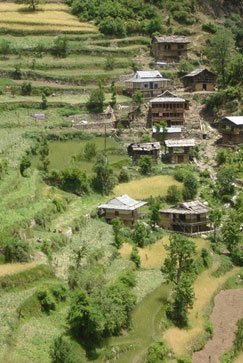 diverted the farming systems from mixed crop cultivation to mono-crop
cultivation leading to the loss of agro-biodiversity. The foremost
reason of erosion in agro-biodiversity in the mountains is due to:
(a) changing attitude of farmers towards fine grains, (b) supply
of HVY seeds and other inputs at subsidized cost by the government,
(c) attraction to maximize profits through cash crop monocultures,
and (d) lack of market for produce of traditional crops. If there
is little market available for traditional crops, the prices offered
are unattractive to the farmers. The acreage under traditional crops
has declined substantially in the last two decades. Loss of genetic
diversity coupled with inequity in the society rapidly imperils
the native landraces and overall sustainability of the agriculture
systems in Western Himalayas. When any species or cultivar is lost
the centuries old traditional knowledge about the same also disappears.
It disbalances the mountain agro-ecosystem and sustainability. Western
Himalayan zone of Himachal Pradesh is characterized with fragile
ecosystems in which the biodiversity is critical component. When
the wild biodiversity is relatively protected and preserved by creation
of national parks and sanctuaries, the agro-biodiversity is left
on the mercy of farmers who are in fact prone to changing economic
and social environments. Insensitivity of Department of Agriculture
and gross neglect by Himachal Government are impelling the rich
diversity of the crops and the agro-technologies the traditional
farmers practice to wipe out. This is causing incalculable harm
to the local agro-ecosystems and the sustainability of farming systems.
It is in the above context the conservation of agro-biodiversity
and attainment of sustainability of agriculture needs urgent attention.
diverted the farming systems from mixed crop cultivation to mono-crop
cultivation leading to the loss of agro-biodiversity. The foremost
reason of erosion in agro-biodiversity in the mountains is due to:
(a) changing attitude of farmers towards fine grains, (b) supply
of HVY seeds and other inputs at subsidized cost by the government,
(c) attraction to maximize profits through cash crop monocultures,
and (d) lack of market for produce of traditional crops. If there
is little market available for traditional crops, the prices offered
are unattractive to the farmers. The acreage under traditional crops
has declined substantially in the last two decades. Loss of genetic
diversity coupled with inequity in the society rapidly imperils
the native landraces and overall sustainability of the agriculture
systems in Western Himalayas. When any species or cultivar is lost
the centuries old traditional knowledge about the same also disappears.
It disbalances the mountain agro-ecosystem and sustainability. Western
Himalayan zone of Himachal Pradesh is characterized with fragile
ecosystems in which the biodiversity is critical component. When
the wild biodiversity is relatively protected and preserved by creation
of national parks and sanctuaries, the agro-biodiversity is left
on the mercy of farmers who are in fact prone to changing economic
and social environments. Insensitivity of Department of Agriculture
and gross neglect by Himachal Government are impelling the rich
diversity of the crops and the agro-technologies the traditional
farmers practice to wipe out. This is causing incalculable harm
to the local agro-ecosystems and the sustainability of farming systems.
It is in the above context the conservation of agro-biodiversity
and attainment of sustainability of agriculture needs urgent attention.
The
activities of the project include:
a. Identification of agro-biodiverse area
b. Mapping of agro-biodiversity and screening of varieties/ cultivars
of traditional crops
c. Documentation of indigenous wisdom of farmers to characterize
the traits of cultivars/varieties
d. Extension and education about the agro-biodiversity conservation
in-situ
e. Establishment of seed banks to preserve the gene pool ex-situ
f. Linking the traditional food produce with the market for letting
the farmers obtain comparable prices of their farm produce of traditional
crops
The
project is currently operational in Kullu district with future possibility
of extension in Mandi, Kangra and Chamba districts of Himachal Pradesh.
For achievements of the project, please see Annual
Report.
For further information, please contact
the organization.
Sustainable
Agriculture Development
The use of chemical inputs on a large scale in mountains of Himachal
Pradesh has a variety of negative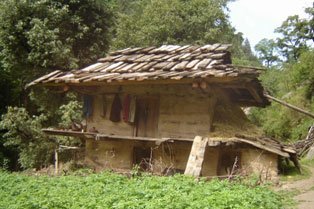 effects. Chemical fertilizers are destroying the soil structure
with evidence of declining productivity, increasing health risks,
loss of biodiversity on-farm, reducing food security and overall
environmental damage in mountain agro-ecosystems. Monoculture is
gradually taking over, which is obviously disastrous in the long-term.
For example, garlic has been taking over the cereal and staple crops.
The farmers who have been using chemicals for over a decade now
look for alternatives of chemicals. Besides, other set of farmers
want improvement of productivity of traditional cultivars they have
been growing for years. The project, therefore, addresses the need
of farmers to get rid of chemicals and increase productivity of
diverse
effects. Chemical fertilizers are destroying the soil structure
with evidence of declining productivity, increasing health risks,
loss of biodiversity on-farm, reducing food security and overall
environmental damage in mountain agro-ecosystems. Monoculture is
gradually taking over, which is obviously disastrous in the long-term.
For example, garlic has been taking over the cereal and staple crops.
The farmers who have been using chemicals for over a decade now
look for alternatives of chemicals. Besides, other set of farmers
want improvement of productivity of traditional cultivars they have
been growing for years. The project, therefore, addresses the need
of farmers to get rid of chemicals and increase productivity of
diverse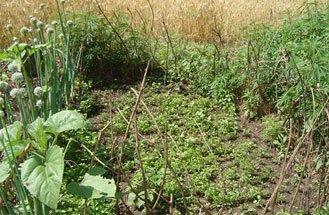 traditional cultivars of the crops. It invariably enhances the food
security and ensures the livelihood of farmers in the long-term.
traditional cultivars of the crops. It invariably enhances the food
security and ensures the livelihood of farmers in the long-term.
The
project is currently operational in Kullu district with future possibility
of extension in Mandi, Kangra and Chamba districts of Himachal Pradesh.
For achievements of the project,
please see Annual Report.
For further information, please contact
the organization.
Microcredit & Micro-Entrepreneurship for Sustainable Livelihoods
The
microcredit is the main tool, which is being used by the communities
to improve their economic situation and alleviate the poverty. Microcredit
activities have started an institutionalization process in the villages.
Under institutionalization the women address their impoverishment
on priority and came forward to act for livelihoods development
so that their economic empowerment can take place along with social
upliftment. To achieve the results the organization goes through
a cumbersome process of bringing people together. The women, usually
landless and poor, are organized to form SHGs that are linked to
local banks. After formation of SHGs the women groups undergo intensive
training and capacity building. The microcredit activities address
the following:
•
Disparity in economic status of families;
• Lack of self-reliance;
• Disinterest in democratic system;
• Less mutual cooperation and coordination;
• Lack of proper information; and
• Rumors and misconceptions.
Micro
credit programmes have proved to be an effective tool in freeing
people from poverty and have helped to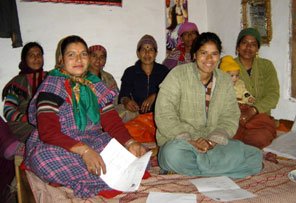 increase their participation in the economic and political processes
of society. The organization embraces improving access to credit
for small rural producers, landless farmers and other people with
low or no income, with special attention to the needs of women and
disadvantaged and vulnerable groups. Women are major beneficiary
of micro credit the SHARA/GIT arranges from local banks. Destination
of the funds primarily includes agriculture, livestock, petty trading,
small craft and processing industries.
increase their participation in the economic and political processes
of society. The organization embraces improving access to credit
for small rural producers, landless farmers and other people with
low or no income, with special attention to the needs of women and
disadvantaged and vulnerable groups. Women are major beneficiary
of micro credit the SHARA/GIT arranges from local banks. Destination
of the funds primarily includes agriculture, livestock, petty trading,
small craft and processing industries.
The
project is currently operational in Kullu district with future possibility
of extension in Mandi, Kangra and Chamba districts of Himachal Pradesh.
In Banjar and Kullu blocks, there were 50 SHGs with 642 women members
in 360 villages till March 2008.
For achievements of the project, please see Annual
Report.
For further information, please contact
the organization.
Additional
Proposed Projects |
•
|
Micro-entrepreneurship
for poverty reduction among Muslim and Dalit communities in
Uttar Pradesh |
•
|
Interventions
to support NTFP-based livelihoods through such as market information,
maneuvering trade chain, value addition, and other approaches
in Chhattisgarh, Himachal Pradesh and North-East India |
•
|
Post-harvest
technology support to farmers in Central India and Himalayas
|
•
|
Livestock
and pastoral development in Western Himalayas |
•
|
Rainwater
management for sustainable agriculture and livelihoods in
Mountain of Himachal Pradesh and Uttarakhand |
|
|
| For
further information on these proposed projects, please see List
of Projects OR contact
the organization. |
|