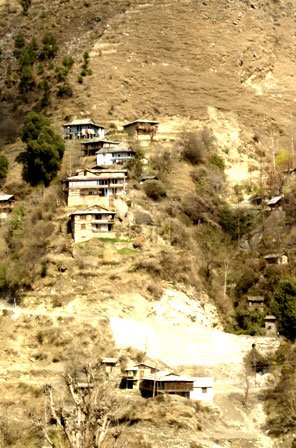
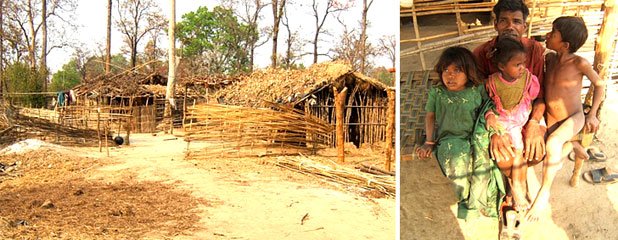
2. To change the power relations in society of Kullu district, planned and strategic interventions were undertaken by GIT with the facilitation of SHARA at local level. There were identified the four areas of interventions: (i)
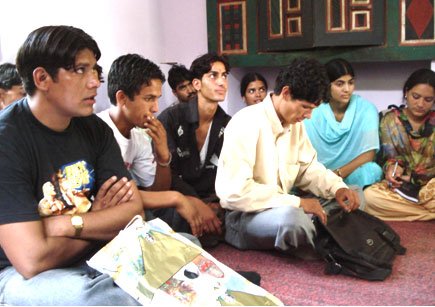
organization and leadership, (ii) rights education, (iii) social empowerment, and (iv) improvement of economics of families. Intensive awareness of Dalit families in 12 villages was done leading to the formation of women groups and Dalit Yuva Sangathans. Special component of Dalit rights was incorporated in ‘women empowerment’ package, which was delivered to women SHGs in 360 villages of Kullu district. Leadership development activities included the orientation programmes that were organized for large number of Dalit boys and girls. Rights education for Dalits is a constant process. An education manual in Hindi is also under preparation on rights of Dalits. Local self-governance institutions (gram panchayats) since are seldom sensitive to poor dalits, which is due to least representation/ participation of dalits. So shaping leadership capacities of dalits and enabling them to increase their representation in panchayats and other village institutions are given emphasis in dalits empowerment process. For socio-economic improvement of dalit families, the women and youths are linked with micro-credit activities and the government schemes of development. A guidebook is also under preparation on the government schemes available to rural youths and women and the benefits therein for scheduled castes. Intensive work of dalits empowerment is proposed to expand in 100 villages of Kullu district.
Tribal Land Rights
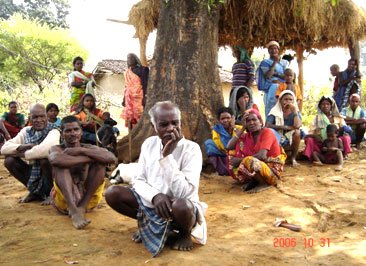
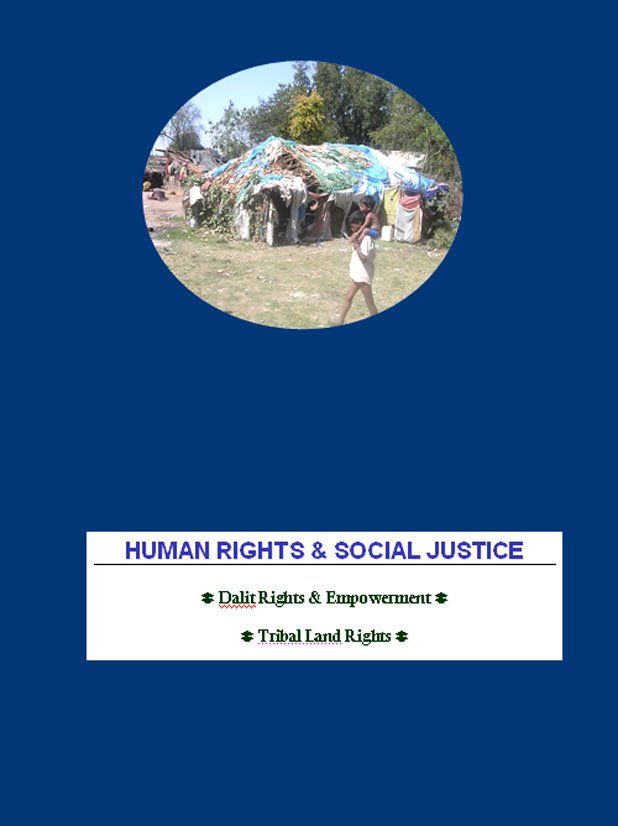
Land is life for the tribes. But the land is becoming scarcer to the tribes day by day as it is alienated by settlers and powerful co-existing communities or acquired in the wake of globalization by the government and corporations. Santal Parganas of Jharkhand is inhabited majorly by Santal and Paharia tribes. The non-tribal settlers and immigrants, industries and urban agglomerations have taken away the lands of tribes massively. As a result thousands of tribal families have become landless and live without any base of livelihood. Protecting tribal lives and livelihoods by litigating to liberate the lands is the action of urgent attention. GIT has tied up with a local tribal organization, Santal Education Trust, in Santal Parganas of Jharkhand.
Achievements }}
The alliance of GIT and SET has recovered about 250 bigha of tribal lands in a short period by litigating against the alienators. Trial for about 4600 bigha of tribal lands is going on. GIT helps SET undertake document the process and achievements in the cases, and compile and review the advocacy efforts on land issues in the country, and the legislative and court responses to the public pressure. GIT assists SET by costs of fighting suits.




















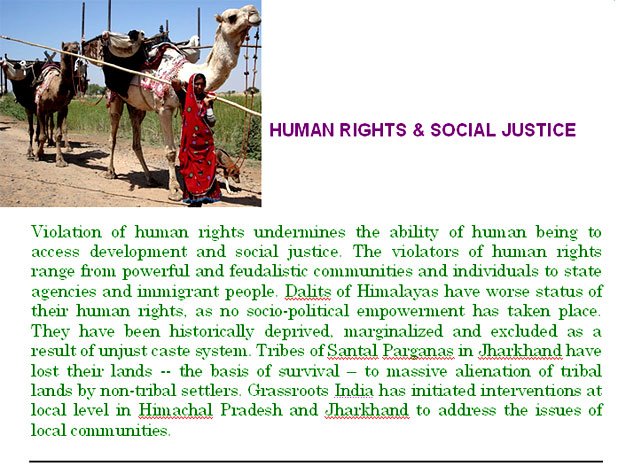
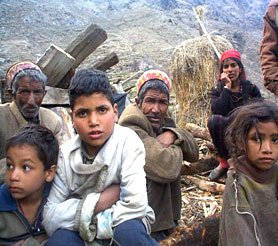 Dalits in mountains of Himalayas have socially, economically and environmentally deprived. Economic deprivation of dalits is coupled with ‘environmental injustice’. In a bid to organize dalits, Grassroots India Trust (GIT) commissioned a pilot study on dalits in 20 villages of Banjar block of Kullu district. The study came up with the following findings: