Grassroots Media Initiative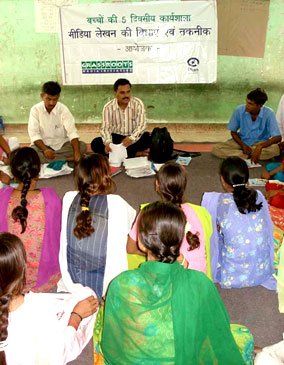
Media has become potentially one of the most effective ways of popularizing the issues as also getting adequate space in social domain. But, at times when the media is under onslaught of commercialization and open market economy and when there is stiff competition between the mainstream information (of corporations and politics) and the real development issues of the society on the margin, the issues of poor people get least priority. Considering gaps in development communication, the Grassroots Media Initiative had been conceptualized and formed as independent group under GIT with Resolution No.2. Grassroots Media Initiative (GMI) intends to enable the marginalized people to raise their voices in the mainstream media as also arms their voices be heard through alternative communication.
Achievements }}
- Rural youth of Bharatpur district in Rajasthan had been given training of how to write news, features, articles, letter to editor, news story, etc. for the print media. GMI also taught how to prepare a newsletter of their villages. Designing and computer composing was also one of the contents of the 4 days training held on 9-12 September 2006. This training of rural youths including women was hosted by Women’s Action for Development (WAFD), Delhi.
- GMI organized 5-day trainings for children at SBMA, Gairsain of Chamoli district in Uttaranchal, at URMUL, Bikaner in Rajasthan, at CASP in Delhi, at GNK in Maharjganj in Uttar Pradesh and at PREM in Orissa. The trainings were focused on practical skills of writing the varied types of features, news, news stories and interview, and imparted the perspective building skills. These trainings were organized between December 2006 and June 2007. After the trainings, the follow-up was also done by expert reporters.
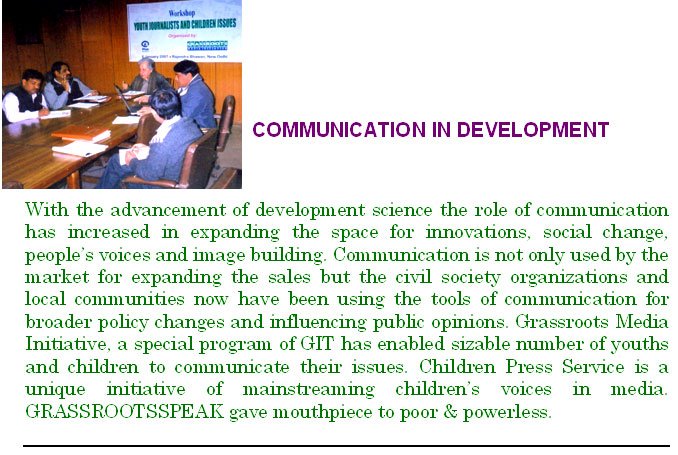
- To sensitize the media persons, interactive workshops were organized with youth journalists in Delhi, Dehradun and Lucknow. The issues of children remained the core topics of discussions and debates. For the purpose of mainstreaming children’s issues in media, 2 issues of Journalist Alert were released and distributed among journalists and others.
- GMI has been operating an e-group “GRASSROOTS-in-action”, which is one of the largest e-groups in the world. It currently has over 8,000 e-mail IDs in database receiving regular postings. The e-group discusses extensively various crucial issues among the members.
Children Press Service
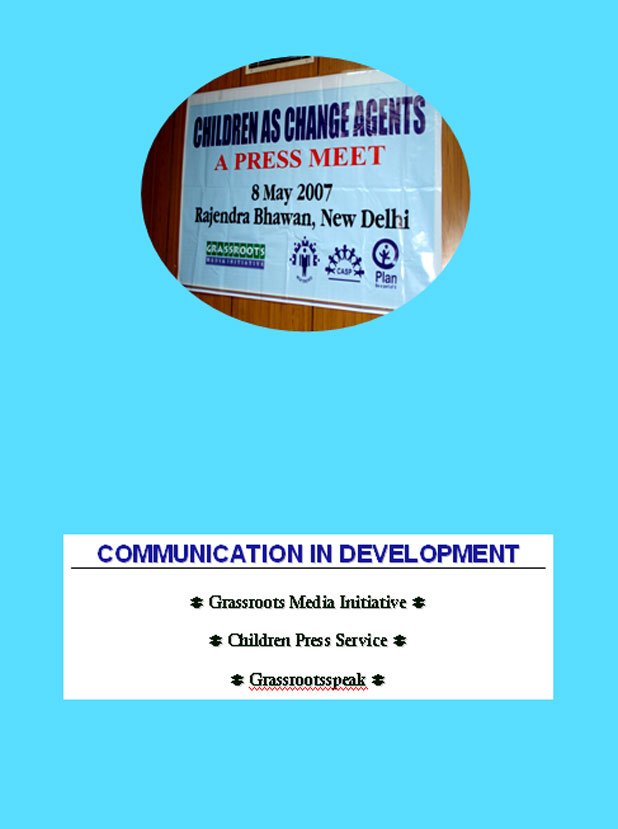
Children while 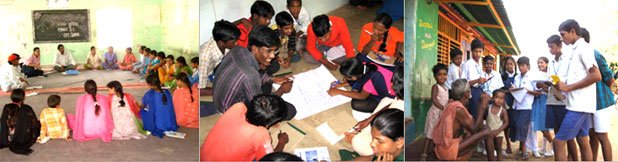 sunken in all adversaries or otherwise want to express their feelings, views, opinions, experiences, knowledge, and solutions. As the children are not allowed to speak at home in front of elders, as the children are disallowed to even sit in gram sabha meeting, as the children’s views are disrega sunken in all adversaries or otherwise want to express their feelings, views, opinions, experiences, knowledge, and solutions. As the children are not allowed to speak at home in front of elders, as the children are disallowed to even sit in gram sabha meeting, as the children’s views are disrega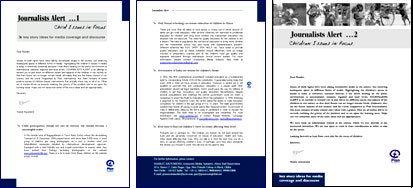 rded in the matters predominantly controlled by elders, the voices of the children are discarded/ disrespected/ excluded or undermined in the mainstream media including newspapers, magazines, TV, radio. The children not only speak and express their own issues (exploitation, abuse, exclusion, beating, trafficking, torture, hunger, violation of rights, illiteracy, sexual abuse, neglect, discrimination, poverty, victimization, work load and violence against them), but they also express their understanding/ feelings about the surrounding they live in. They express about poverty in family, worse health situation, loss of livelihood systems, migration and its causes/effects, polluted/ contaminated environment, degradation of forests, conditions of women, status of educ rded in the matters predominantly controlled by elders, the voices of the children are discarded/ disrespected/ excluded or undermined in the mainstream media including newspapers, magazines, TV, radio. The children not only speak and express their own issues (exploitation, abuse, exclusion, beating, trafficking, torture, hunger, violation of rights, illiteracy, sexual abuse, neglect, discrimination, poverty, victimization, work load and violence against them), but they also express their understanding/ feelings about the surrounding they live in. They express about poverty in family, worse health situation, loss of livelihood systems, migration and its causes/effects, polluted/ contaminated environment, degradation of forests, conditions of women, status of educ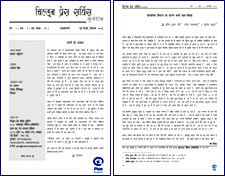 ation in schools, agriculture, governance system, development of villages/ mohalla, and so on. They also offer solutions of the problems. But all this remains unheard, un-surfaced, un-incorporated. The voices of the children do not get adequate space in mainstream media as the media infringes their rights to be published. Resultantly, it backfires the children as their voices are kept out of public domain, which otherwise would have been taken into consideration by society in general and policy makers in particular. Building upon the above background, the project “Mainstreaming Children’s Voices in Media” launched Childr en Press Service (CPS) in November 2006. It included the publication of ‘Children Press Service Bulletin’ on monthly frequency and the placement of children-authored stories of change in mainstream newspapers and magazines of Hindi. ation in schools, agriculture, governance system, development of villages/ mohalla, and so on. They also offer solutions of the problems. But all this remains unheard, un-surfaced, un-incorporated. The voices of the children do not get adequate space in mainstream media as the media infringes their rights to be published. Resultantly, it backfires the children as their voices are kept out of public domain, which otherwise would have been taken into consideration by society in general and policy makers in particular. Building upon the above background, the project “Mainstreaming Children’s Voices in Media” launched Childr en Press Service (CPS) in November 2006. It included the publication of ‘Children Press Service Bulletin’ on monthly frequency and the placement of children-authored stories of change in mainstream newspapers and magazines of Hindi.
Achievements }} 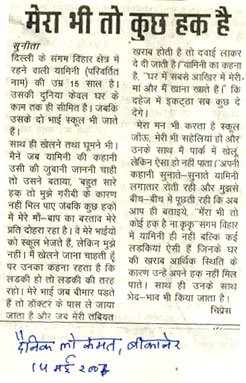
- In a short time of 5 months 43 stories/ articles written by children got placed/ published in mainstream Hindi newspapers.
- To expand the reach of Children Press Service worldwide and give opportunities to the child reporters for submitting news or features they write, a web-based Children Press Service has been created and launched, which is available at: www.childrenpress.org .
GRASSROOTSSPEAK
Communicating the Voice of Voiceless
People at the grassroots level desperately want to express and communicate their sufferings, problems, despair and grievances, and tales of injustice, exploitation, struggle, failure and success as because being having equal citizenship rights they feel that they must also be heard and respected. Originating from inequitable, pseudo-democratic, racial and class-captured milieu of governance systems and society structures, countless barriers work together that disallow the voices of poor, disadvantaged, marginalized and ‘endangered’ people to surface into power corridors, ruling class mess, policy cooking chambers and elitists’ luxury offices, cars or bedrooms. The rich and rulers at their dining table must taste tears of unlucky majority suffering or dying unattended.
GRASSROOTSSPEAK south asia p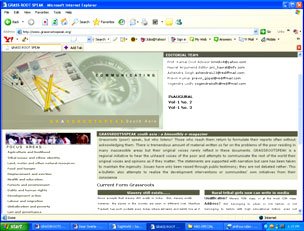 ricks the original voices of the (made) voiceless from remotest areas of South Asia and communicate to ‘powerhouses’ and to all those who, being important link of change process, can influence the public opinion in people’s favour. ricks the original voices of the (made) voiceless from remotest areas of South Asia and communicate to ‘powerhouses’ and to all those who, being important link of change process, can influence the public opinion in people’s favour. 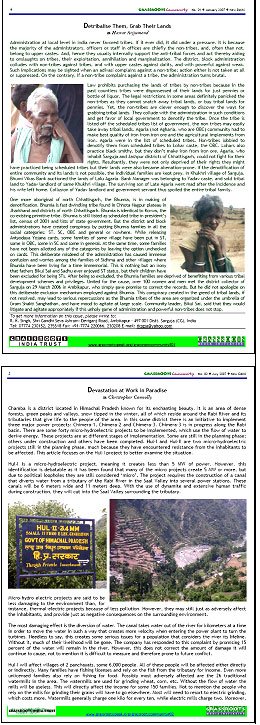 GRASSROOTSSPEAK south asia looks forward to build on back-forth linkages of development communication and information flow under the project “Communicating the Voice of Voiceless”, which was formally launched from January 2007. Focus areas include: (1) agriculture and livelihood; (2) tribal issues and ethnic identity; (3) land, water and other natural resources; (4) food and hunger; (5) displacement and eviction; (6) health and education; (7) forests and environment; (7) dalits and human rights; (8) development action; (9) labour and migration;(10) globalization and poverty; (11) law and governance; (12) women & children; (13) other relevant areas. It reaches the communities in remote areas and interviews the people who suffer. The voices of the interviewed people are recorded on voice recorders. Later these voices reflecting the direct opinions, views of the people are put in a form of complete story on that particular issue. Voices of people then are put on website of GRASSROOTSSPEAK south asia [www.grassrootsspeak.org] or other such instruments. GRASSROOTSSPEAK south asia looks forward to build on back-forth linkages of development communication and information flow under the project “Communicating the Voice of Voiceless”, which was formally launched from January 2007. Focus areas include: (1) agriculture and livelihood; (2) tribal issues and ethnic identity; (3) land, water and other natural resources; (4) food and hunger; (5) displacement and eviction; (6) health and education; (7) forests and environment; (7) dalits and human rights; (8) development action; (9) labour and migration;(10) globalization and poverty; (11) law and governance; (12) women & children; (13) other relevant areas. It reaches the communities in remote areas and interviews the people who suffer. The voices of the interviewed people are recorded on voice recorders. Later these voices reflecting the direct opinions, views of the people are put in a form of complete story on that particular issue. Voices of people then are put on website of GRASSROOTSSPEAK south asia [www.grassrootsspeak.org] or other such instruments.
Achievements }}
Various stories have been developed after recording the voices of poor and powerless people in Himachal Pradesh, Uttar Pradesh, Chhattisgarh and Madhya Pradesh. For the coverage of stories Mr. Christopher Connolly, a US national with degree in International Business from San Diego State University, USA, and International Relations at Oxford New College, UK, and Ms. Mladjana Mladjenovic, a national of New Zealand and former Yugoslavia who graduated from University of Victoria, Wellington in International Relations were also engaged. Several good stories have also been published in GRASSROOTS COMMUNITY newsletter of GIT apart from web portals. |